The Science Behind How Memories Form
When people ask whether how memories form really matters, they deserve an answer grounded in studies rather than slogans. Here is a balanced look at what is known so far.
Memory is not a single filing cabinet but a process with three broad stages: encoding, when information is first taken in; consolidation, when it is stabilised; and retrieval, when it is brought back. A problem at any stage can feel like forgetting.
Knowing which stage is struggling helps you pick the right fix, whether that is better attention, better sleep or better practice. The better you understand the biology, the less vulnerable you are to exaggerated promises about quick fixes.
The Evidence in Brief
Neuroscience research, including decades of work on patients with hippocampal damage, shows that different brain systems handle different kinds of memory. Laboratory studies consistently find that attention during encoding and sleep after learning are two of the strongest predictors of what we keep. Keeping that nuance in mind makes it much easier to judge claims you encounter elsewhere.
Where the Evidence Comes From
Patients with specific kinds of brain injury have taught researchers a great deal about which regions support which abilities, and modern imaging has built on those early discoveries.
Different memory systems handle different jobs. Episodic memory stores events, semantic memory stores facts, and procedural memory stores skills such as riding a bike. Damage or ageing can affect one system while sparing the others, which is why someone might forget a recent conversation yet still play the piano well.
Duration is easy to overlook. A benefit measured after twelve weeks says little about the first few days, and short studies cannot reveal long-term effects.
Key Findings
- Encoding depends heavily on attention; information you never properly noticed cannot be recalled later.
- Consolidation continues for hours and days after learning, much of it during sleep.
- Every act of retrieval slightly changes a memory, a process researchers call reconsolidation.
- Short-term memory holds a small amount of information for seconds, while long-term memory can last a lifetime.
- Emotion strengthens encoding, which is why vivid or stressful events are often remembered in detail.
- Practising retrieval, for example by self-testing, strengthens memories more than simply rereading.
Important Limitations
Finally, safety evidence matters as much as benefit evidence. Something with a small upside and a real risk is not a good trade for most people. A related misconception is worth naming: Memories are stored like recordings that replay exactly. In fact, memories are reconstructed each time and can shift with every recall.
Readers also meet this idea: If you forget something, it was never stored. In fact, often the memory exists but the retrieval cue is missing, which is why hints bring things back.
Spotting Overstated Claims
Be wary of before-and-after stories, celebrity endorsements and phrases such as scientifically proven with no study named. Genuine evidence can be looked up and checked.
For a second opinion from a public source, see MedlinePlus.
Turning Evidence Into Action
These practical steps are a sensible place to start:
- Reduce distractions when you need to learn something new.
- Test yourself instead of rereading notes.
- Protect sleep on nights after important learning.
- Link new information to something you already know well.
Consider a common scenario. If you forget where you parked, the problem was probably encoding: you were thinking about something else as you locked the car. Pausing for two seconds to notice the spot is often all it takes.
MemoHoney and This Topic
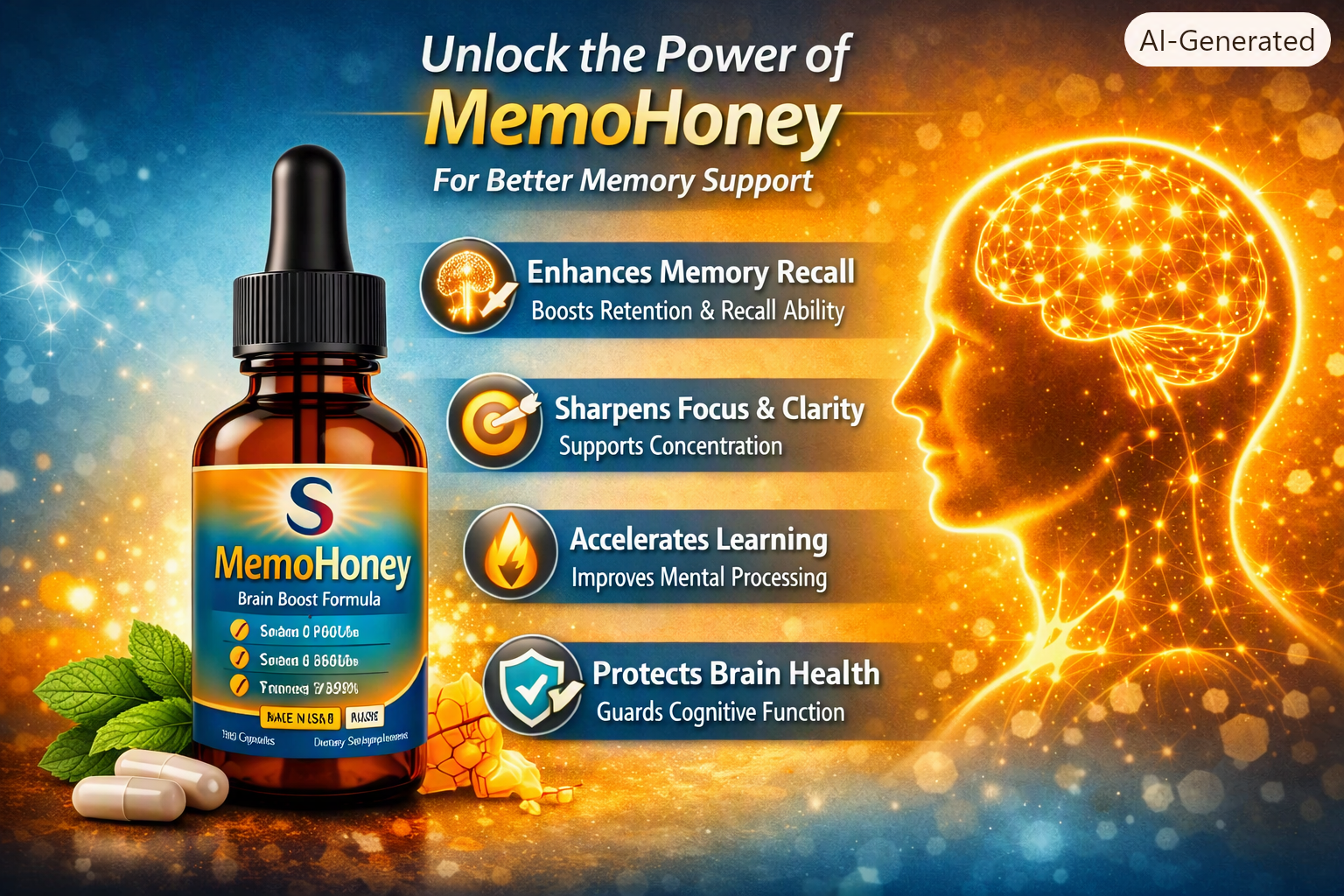
No capsule can substitute for the habits described above. MemoHoney is intended as one small part of a routine that already includes sleep, movement and good nutrition. The MemoHoney benefits page explains what it is formulated to support.
To avoid counterfeit stock, order only from the MemoHoney official website, where the MemoHoney discount is applied automatically to multi-bottle bundles.
Key Takeaway
Understanding how memories form will not transform your memory overnight, but it will help you choose what is worth your time, money and attention. That is a genuine advantage.
Check MemoHoney Official Pricing